Making Art and Meaning Under the Influence of Faeries

Updated: Jul 24
In an age that can feel dark and lonely, in times when it feels like all hope is lost, I return to fairy tales and fantasy. These stories, sometimes half-remembered but familiar as an old friend, are as meaningful as they ever were. They matter as much to me as they ever have and possibly even more.

Since I was a child, fairy stories have brought magic, art, empathy, patience, and escapism into a world that can feel dull, uncaring, bafflingly fast, and grimly utilitarian.
As an adult, these stories remind me I am not alone in my struggles and joys. They are a shared language and experience. I, like the girl in the tower or the mother who seeks her child, may suffer, but life may turn out happily after all.
All fairy tale practitioners know that fairy tales weren’t always for children. But over the last centuries, many have become so. Which is wonderful. As children, they teach us empathy in the form of care for the stranger, generosity toward the beggar, and kindness toward animals. They offer hope for the downtrodden.
We may be the youngest, the weakest, the ugly duckling, or the abandoned daughter, but we are in the process of becoming something else. There is something inside that will reveal itself, and we will bloom, resist, or escape when the time is right.
And the darkness? The dark woods, the servitude, the witches, and the curses are also part of the magic. Fairy stories don’t pretend the world is simple or all good, shining or without fault. It can be dark. It can be lonely. Sometimes it will feel like all hope is lost. But fairy tales and fantasy show us how to be brave when the woods are dark, and the path isn’t clear. Which is precious, hard-won wisdom.
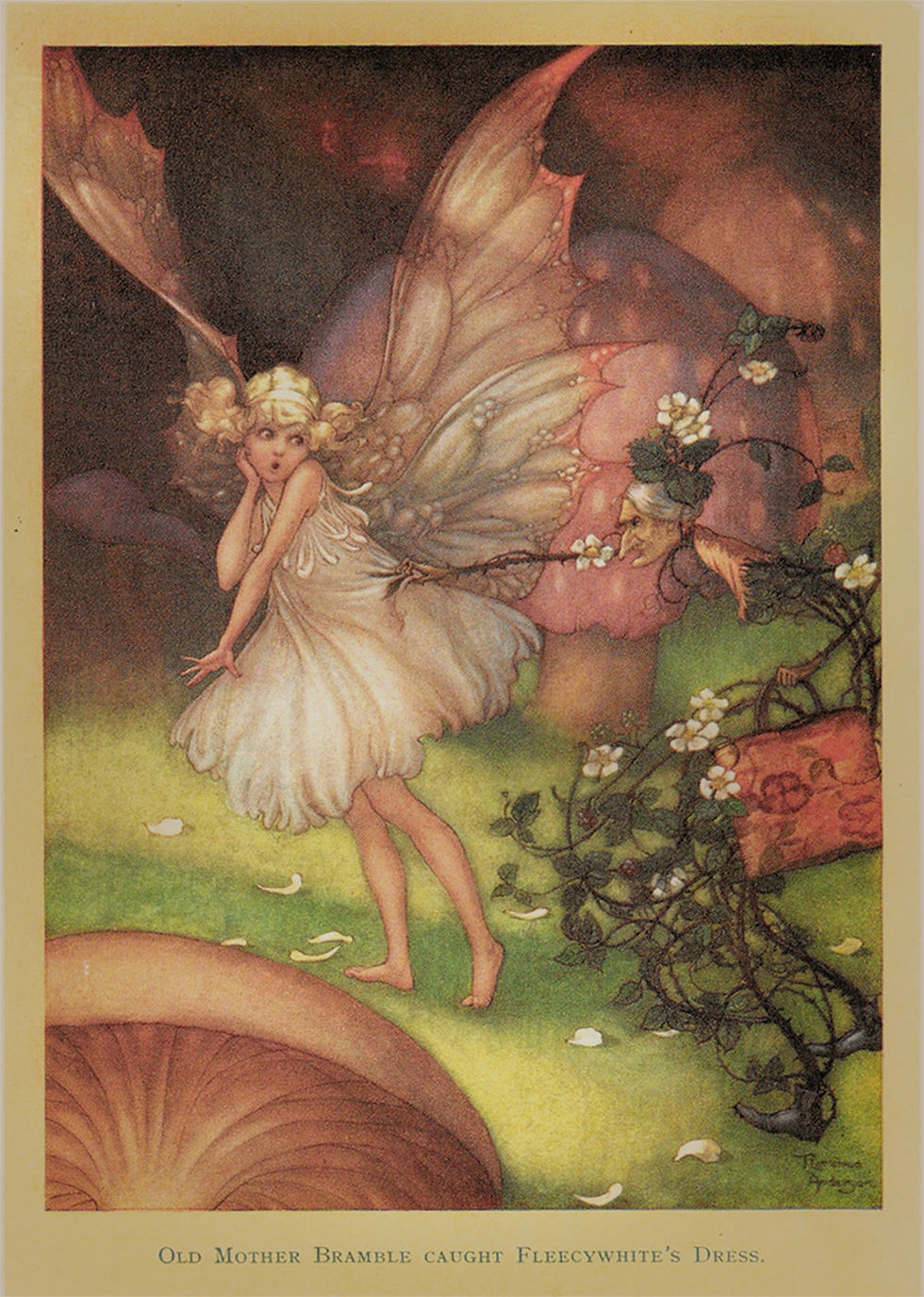
For many of us, these books and stories were our first encounter with storytelling and art. The first time we saw beauty represented alongside darkness. And sometimes, like an Arthur Rackham tree or a Florence Mary Anderson witch, beauty was found within the darkness.
There has been a shift, in some corners, toward making children’s stories brighter and simpler. While there is value in considering what we share with the youngest minds, there is also great risk in narrowing what stories we allow to be told and experienced. When storytellers move away from magic, beauty, and artistic depth in children's stories, something is lost. I believe young people want something shining and ethereal to reach for. Shimmering wings. Polished armor. A magic mirror. A transformation they can cast themselves into. All the children I’ve known have been naturally drawn to what feels mysterious and meaningful, and, above all, what is different from real life.
While fairy tales may be having a moment of oversimplification in popular culture, hope springs eternal. These stories cannot be fully reformed or contained. They are too ingrained in our history and heritage and too vast a multicultural wellspring. From ancient myths to Disney, from global folk tales to the Grimms, from traditional tellings to Angela Carter's subversive reinterpretations, these stories embody and inspire reinvention.
Fairy tale practitioners draw on a mythic tapestry to deconstruct and transform the old into new. We are steadily bringing magic back into the world in quiet and meaningful ways, holding and acknowledging both the light and the dark. The suffering and the magic. We’re teaching children and reminding adults that the world is not always as dark as it appears, that transformation may still be waiting inside of us, and that even when it’s dark, we may yet find our way through the woods.
Comments